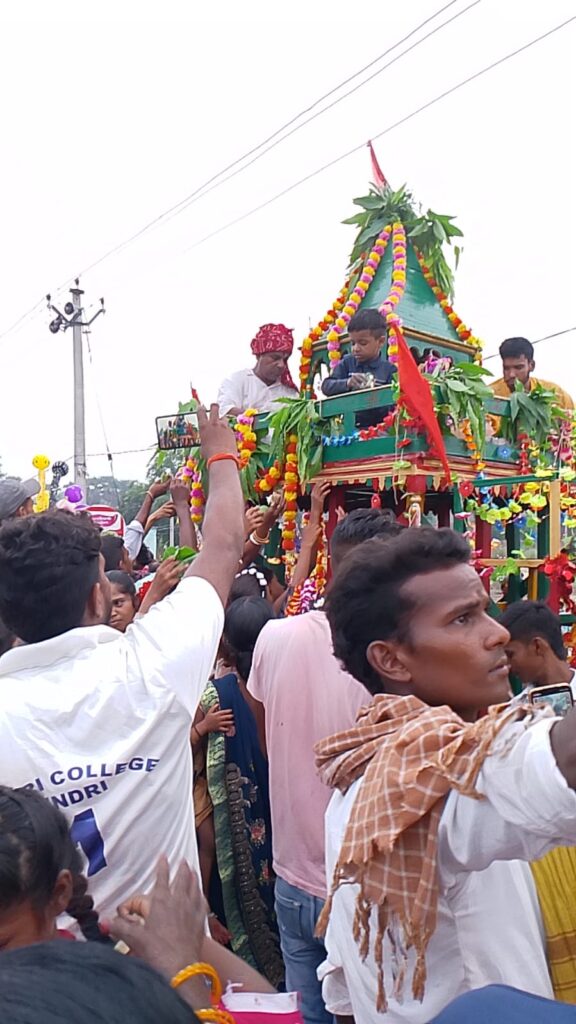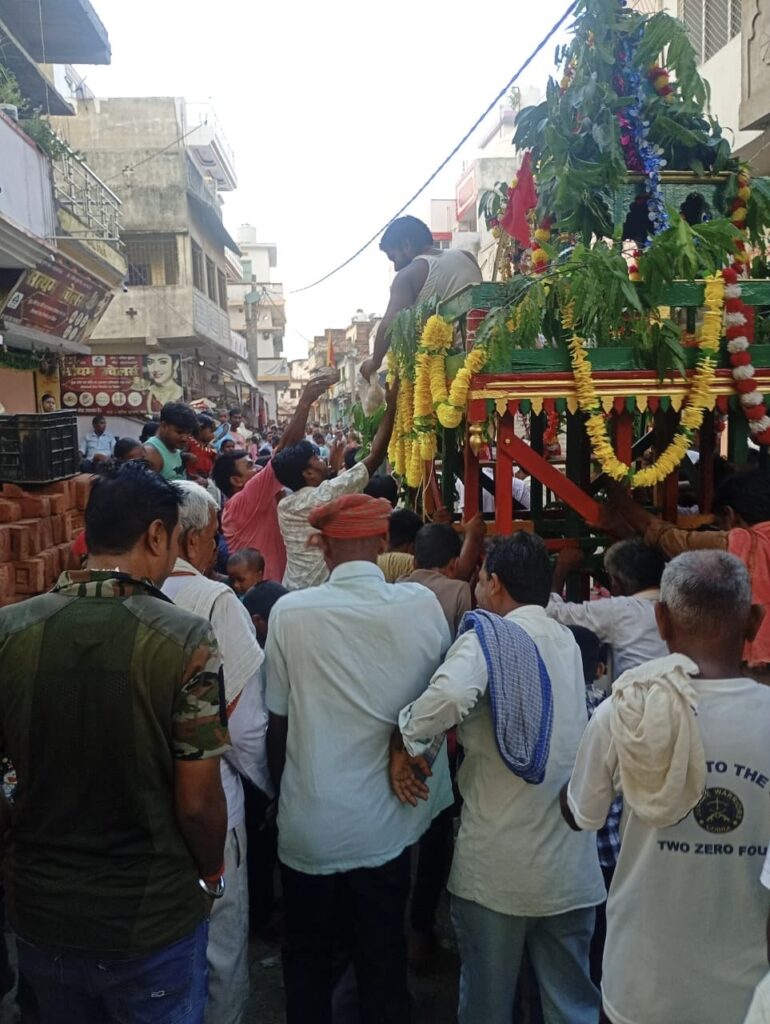
This historic Rath Yatra at Maksudpur is carried out with its own unique tradition. Lord Krishna’s Rath travels from the Nauratan Mandir of the Maksudpur Estate, and Lord Balram’s Rath travels from the village of Pachlakh situated near the banks of the Phalgu river. Their ‘milan’, or reunion takes place at Nau Mile, near the Gaya Engineering College, and the celebration and mela is widely attended by a large number of people from the area.
It is said that this unique Rath Yatra was started in the time of Raja Toral Narain Singh, the 2nd Raja of Maksudpur, sometime in the 1820s, making this a 200-year-old tradition.
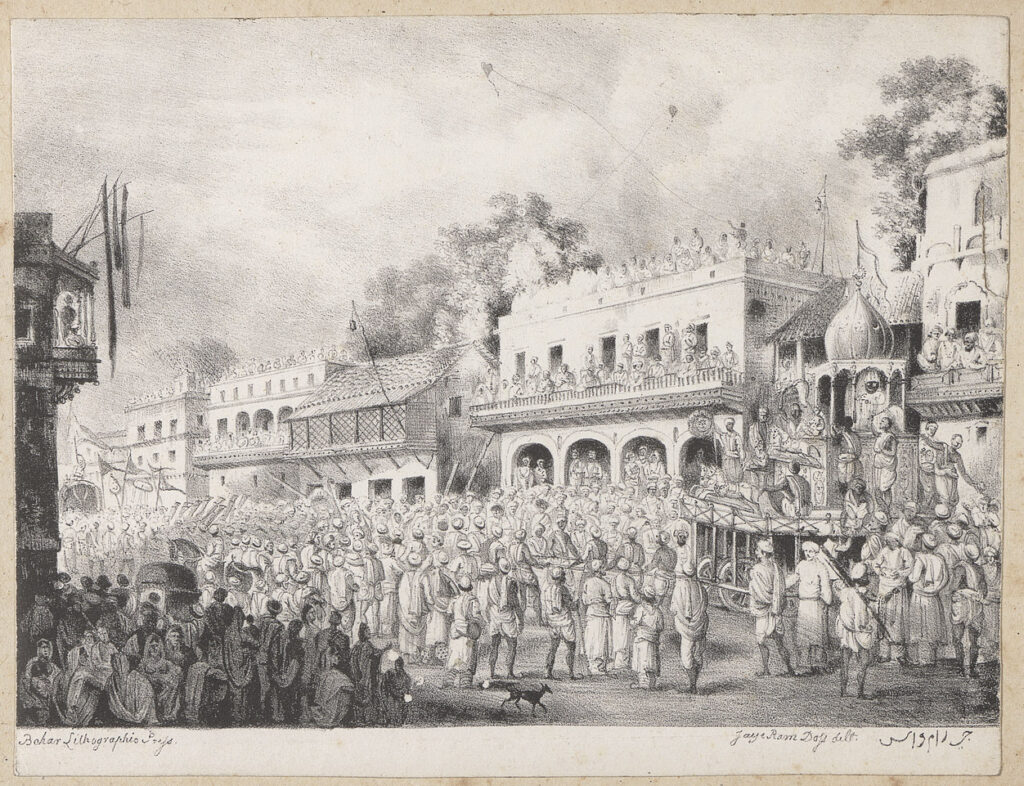
Behar after Charles D’Oyly (1781-1845), Behar Amateur Lithographic Scrapbook
On the auspicious day of the Rath Yatra, a messenger arrives from the Pachlak Mandir with a written invitation on behalf of Lord Balram inviting Lord Krishna from his abode at Nauratan Mandir, to meet at Nau Mile at an auspicious time. A written reply from Lord Krishna accepting the invitation is sent back to Lord Balram.
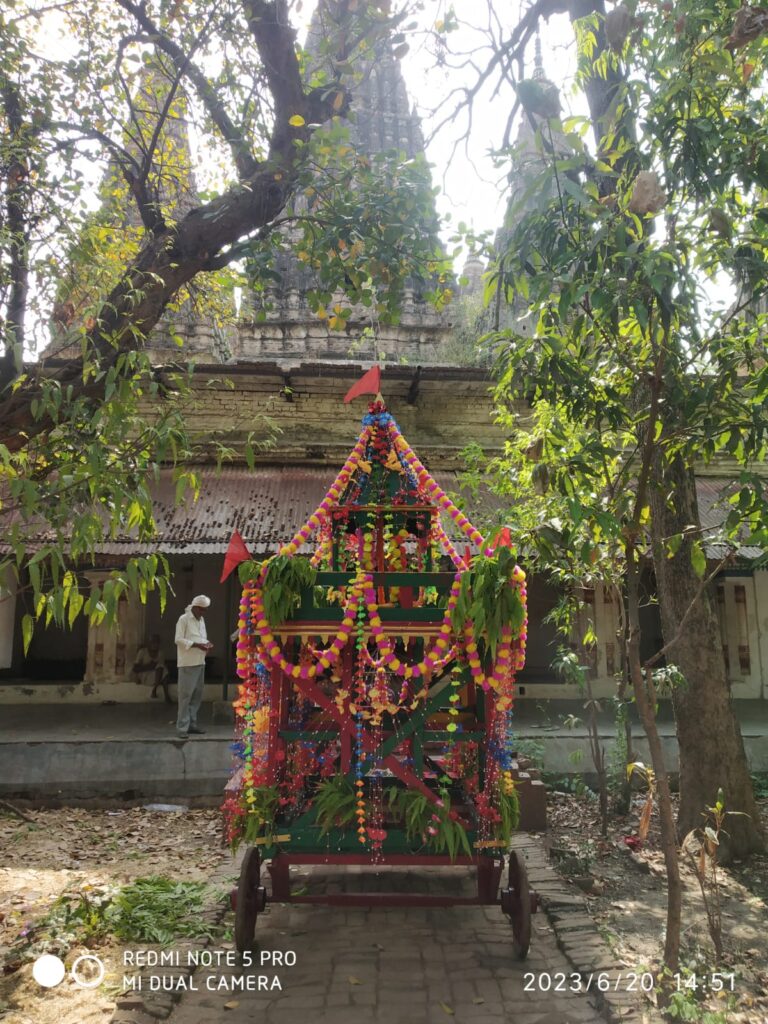
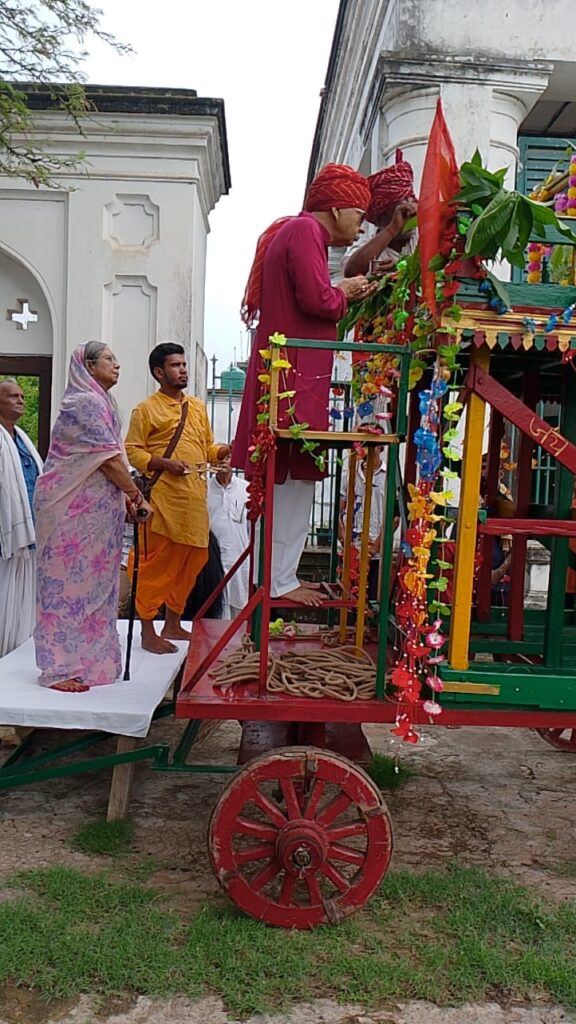
In the afternoon, the Rath is decorated at the Nauratan Mandir and then the Sawari of Lord Krishna comes to the Bhagwati Sthan at the Garh. Here the Rath is received with much fanfare, and puja and seva is carried out by Raja Ajai Singh and Rani Nalini Singh. Then the devotees serve the Lord by pulling the Rath on the journey of 4 kms towards Nau Mile on the Gaya-Fatua Road.
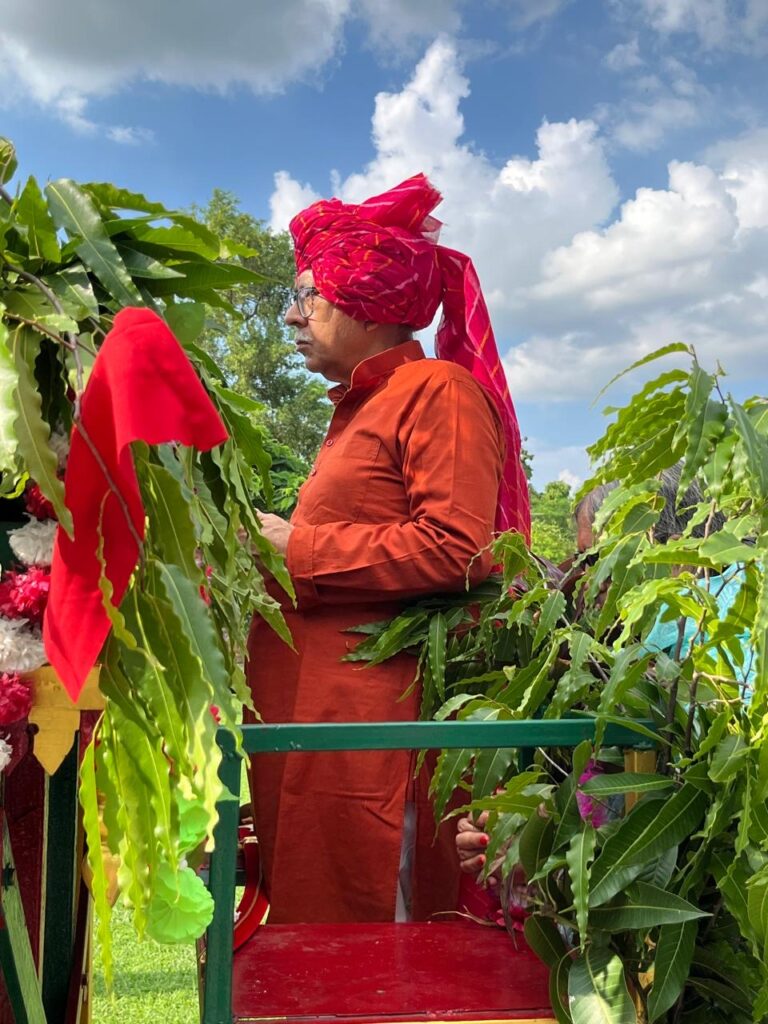
All along the way devotees seek the blessings of Krishna Bhagwan, and several join the procession. At Nau Mile, the Rath of Balram ji arrives from Pachlakh, and the annual ‘milan’ of the siblings takes place as the two Raths come side by side, epitomizing the ultimate bond of love, strength and camaraderie.
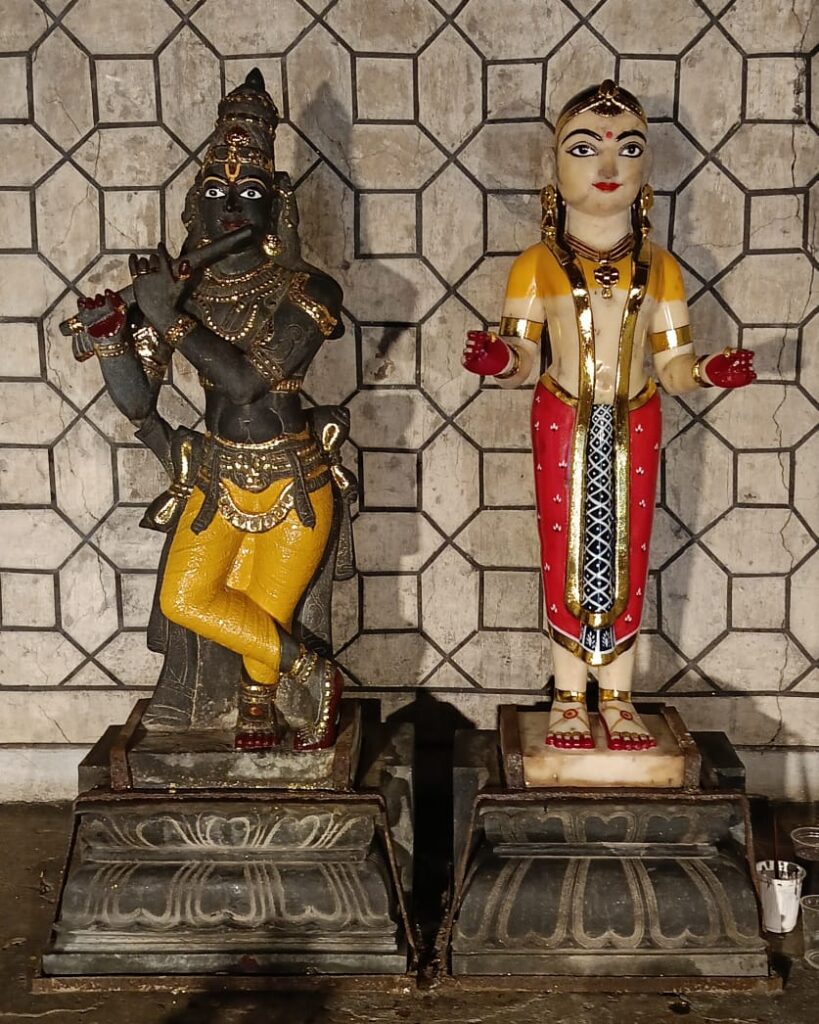
Sometime in the 1980s the statues of Krishna Bhagwan had been stolen and the Rath Yatra had stopped taking place. However, since the 1990s it has been revived and has since been carried out according to its centuries old rituals and traditions, becoming ever more popular amongst the rural community every year.
The attendance this year exceeded previous records, with an estimated forty thousand people being present during the ‘milan’ at Nau Mile.